Current
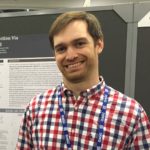
Samuel Tuttle
(PI)
Sam is a graduate of Williams College (Geosciences) and Boston University (Earth & Environment), a former member of the Jacobs Research Lab (Civil & Environmental Engineering, now Earth Systems Research Center) at the University of New Hampshire, and a former member of the Department of Geology & Geography at Mount Holyoke College.
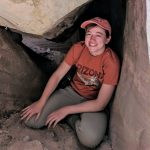
Madison Woodley
(Ph.D. candidate)
Madison is conducting research in measuring snow water equivalent (SWE) in a prairie environment in central Montana, as part of NASA Terrestrial Hydrology Program’s SnowEx project. For her first chapter, she evaluated whether a cosmic ray neutron sensor, which has been previously used to detect soil moisture, can accurately measure snow water equivalent. The remainder of Madison’s PhD research focuses on drivers of snow variability in a forested watershed in the Adirondack Mountains, NY. She defended her PhD in December 2025.
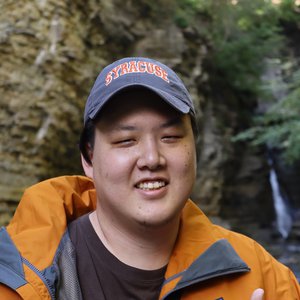
Haejo Kim
(Ph.D. candidate)
Haejo is conducting snow water equivalent (SWE) research at a prairie site in central Montana using cosmic ray neutron sensing (CRNS) and neutron transport modeling. His future work will involve snow modeling and snow spatial variability in Montana and the northeastern U.S.

Eli Mancini
(Ph.D. student)
Eli’s research investigates the spatiotemporal dynamics of snowmelt and its link to watershed hydrology, lake ice timing, and lake mixing dynamics in the Adirondack Mountains, New York, USA.
Fiona Edwardson
(Ph.D. student)
Fiona’s research investigates snowmelt spatiotemporal dynamics using microwave remote sensing.
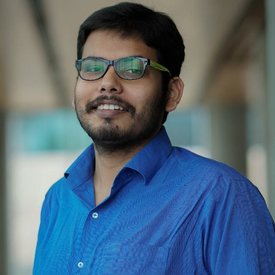
Rahul Kar
(Postdoctoral researcher)
Rahul’s research seeks to combine active and passive microwave observations of snowmelt.
Group Alumni
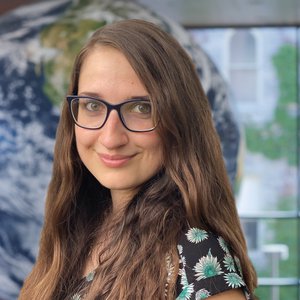
Angela Rienzo
(M.S., 2023)
Angela’s research evaluated how well we can monitor wet snow using passive microwave satellite observations, and investigated what implications these melt events have for snowpack dynamics and hydrology.
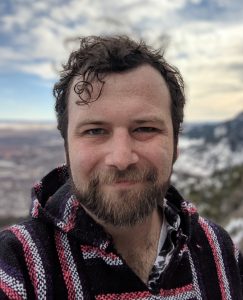
George Duffy
(Postdoctoral researcher, 2022-2023)
George’s research experimented with a data fusion approach to combine active and passive microwave observations of snowmelt in order to create a dataset that draws on the strength of both technologies. He has a background in atmospheric science and remote sensing of snow in the atmosphere.